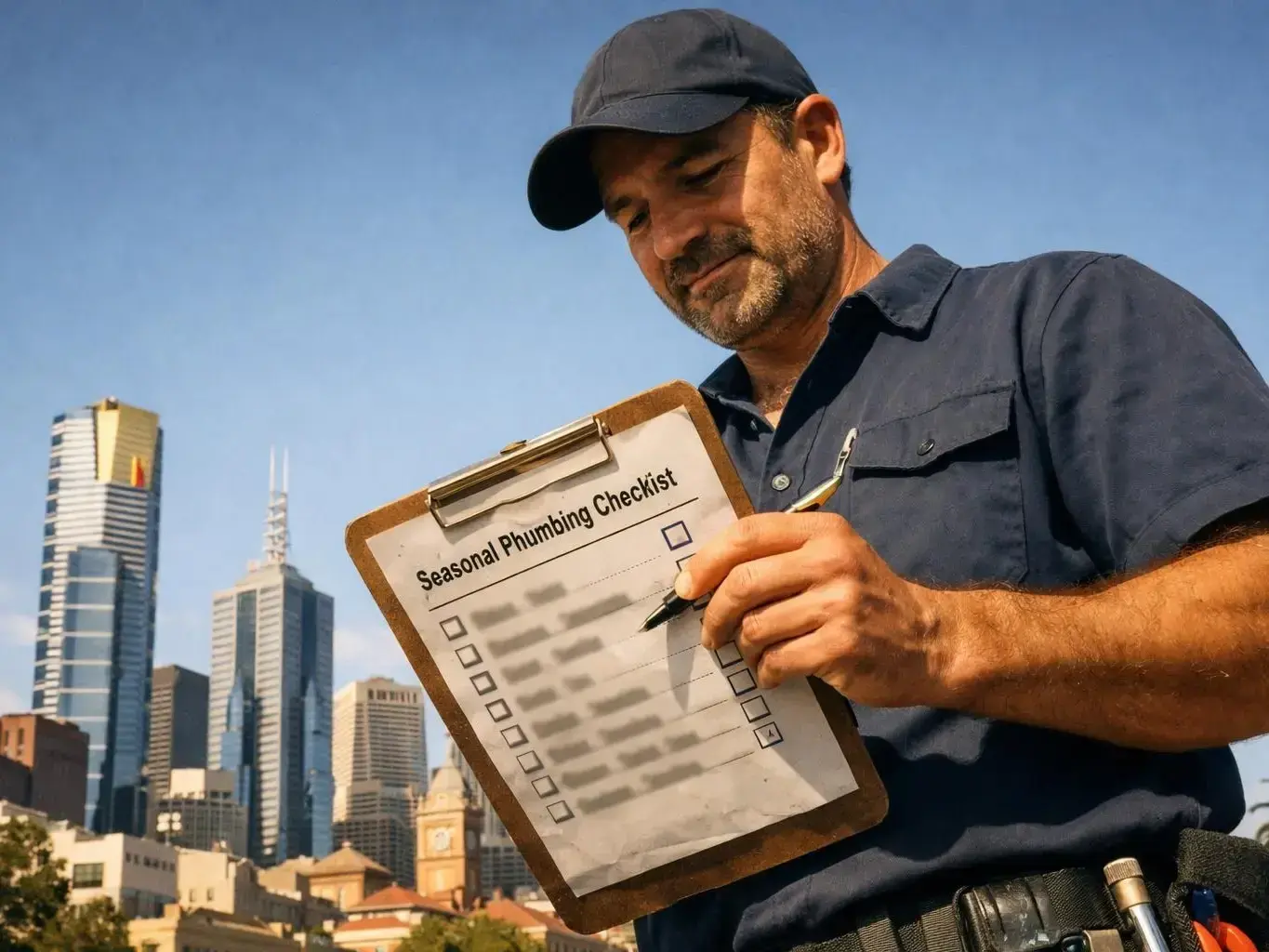
Certified Plumber is a licensed tradesperson who has completed formal training, passed government exams. And met legal requirements to install, repair. And maintain plumbing systems in homes and businesses. Certified Plumbers hold a valid plumbing registration issued by the Victorian Building Authority (VBA) and must follow strict safety and quality standards.
Category
Licensed trade professional
Used for
Legal plumbing installations, repairs. And compliance
Common confusion
Certified Plumber vs. Unlicensed handyman
Also called
Licensed Plumber, VBA-Registered Plumber
Often discussed with
Burst Pipe Repair, Gas Leak Repair

A Certified Plumber has official papers from the VBA. The VBA is the Victorian Building Authority. They say the plumber can work legally.
Related glossary terms: Plumbing Apprentice, Building Code of Australia, Backflow Prevention.
This title means the plumber trained for years. They worked on real jobs. They also passed hard tests. Tests check plumbing, safety. And rules.
Only Certified Plumbers can install pipes. They can put in sinks and toilets. They can connect to water or sewage. Others can't do this work.
Victoria has rules for plumbing. These rules keep people safe. Certified Plumbers know how to follow them.
They can fix hot water systems. They work on gas lines and drains. They also do roof plumbing. They know about water pressure and pipe sizes.
This helps stop leaks. It keeps water clean. It stops damage to buildings. Bad plumbing can cause big problems.
Certified Plumbers learn new things often. They take classes. This keeps them up to date. Rules and tools change over time.
To become a Certified Plumber takes steps. First, you work as an apprentice. This lasts four years.
You work with a licensed plumber. You learn by doing. You also go to trade school. There, you learn the theory.
After four years, you take a test. The VBA gives this test. It checks your knowledge. You must know codes, safety. And standards.
Once you pass, you're registered. You must renew your license each year. You also take more classes. These are called CPD (continuing professional development) courses.
These courses teach new rules. They cover new products. They talk about environmental laws. The VBA checks plumbers often.
If a plumber doesn't follow rules, they can lose their license. Then they can't work legally.
Hiring a Certified Plumber keeps you safe. It also follows the law. In Victoria, plumbing work must be certified.
Councils and insurers need this. If work isn't certified, you may pay fines. You might also pay for repairs.
Uncertified work can cause problems. It might lead to gas leaks. It could contaminate water. It may damage buildings.
Certified Plumbers have insurance. This covers mistakes. It protects you from costs.
Certified Plumbers follow Australian standards. These rules make sure work is good. They help things last longer.
For example, they know about backflow prevention. This stops dirty water from mixing with clean. They also size pipes right. This keeps water pressure strong.
These details matter every day. They affect hygiene. They impact costs over time. Without certification, work may not be safe or correct.
Certified Plumbers are needed for big jobs. They must connect to main water or gas. They also work on sewage.
This includes new bathrooms. It covers hot water systems. They fix burst pipes and blocked drains. Only they can do this work.
Without certification, work may break laws. This can lead to fines. You might need to redo the work.
Certification matters when selling a home. Inspectors check plumbing work. They want to see a licensed plumber did it.
Uncertified work can cause delays. It may lower your home's value. You might need costly fixes.
In emergencies, Certified Plumbers help fast. They have the right tools. They know how to stop more damage.
They follow safety steps. They might turn off gas. They could shut off water. This keeps people and homes safe.
A Plumbing Apprentice is a trainee working under supervision and cannot perform plumbing work independently. A Certified Plumber has completed training and passed VBA exams to work legally.
A handyman can perform minor repairs but is not licensed to install or modify plumbing systems. Certified Plumbers are legally required for most plumbing work in Victoria.
Certification isn’t just about passing exams—it reflects a plumber’s ability to apply knowledge in real-world situations. Experienced Certified Plumbers can troubleshoot complex issues, such as hidden leaks or drainage problems, that unlicensed workers might miss.
A homeowner in Melbourne notices water stains on their ceiling and calls a plumber. The Certified Plumber inspects the roof and identifies a blocked stormwater drain causing leaks. They clear the blockage, repair the damaged flashing. And provide a compliance certificate confirming the work meets Victorian standards. Without certification, the homeowner might have hired an unlicensed worker who failed to fix the root cause, leading to further damage.
Plumbing Apprentice is a training position where a beginner works under a licensed plumber to learn plumbing skills, safety rules. And Victorian plumbing codes. Apprentices complete paid on-the-job work and formal classroom study over 3 to 4 years to earn a Certificate III in Plumbing, qualifying them to apply for a plumbing license in Melbourne.
Building Code of Australia is the set of technical rules that govern how buildings and plumbing systems must be designed, constructed. And maintained across Australia. It ensures safety, health, accessibility. And sustainability in construction, covering everything from structural integrity to water supply, drainage. And fire safety. The code is legally enforceable and updated regularly to reflect new standards and technologies.
Backflow Prevention is a safety measure that stops contaminated water from flowing backward into clean water supplies. It uses valves, air gaps. Or other devices to block reverse flow caused by pressure changes in plumbing systems. Without it, harmful substances like chemicals, bacteria.
Hydrostatic Pressure Test is a method used to check the strength and leaks in pipes, tanks. Or plumbing systems by filling them with water and applying pressure. The test ensures the system can safely handle normal operating pressure without failing or leaking, often required after repairs, installations. Or as part of routine inspections.
National Construction Code is Australia’s performance-based set of technical rules that govern how new buildings, plumbing. And drainage systems must be designed, constructed. And maintained to ensure safety, health. And sustainability. It combines building and plumbing standards into one document updated every three years by the Australian Building Codes Board.
EmergencyPlumberMelbourne.au
Contact EmergencyPlumberMelbourne.au for practical guidance on Certified Plumber and related emergency plumber work in Melbourne.